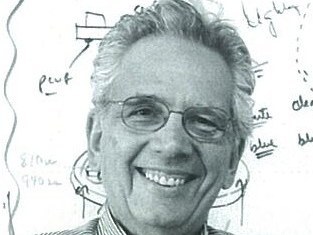
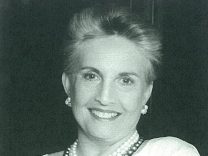
Richard Gitlin remembers his excitement as a kid taking the subway with his dad to explore Manhattan neighborhoods. At a Lionel train exhibit in Times Square, he was fascinated by how the trains didn’t crash. Tracing the track designs, he recognized a methodology in terms of timing and spatial independence. Arguably, the seed of networking technology was sown in him then.
Engineer, scientist, researcher, executive, teacher, inventor, and entrepreneur, Rich grew up to be a defining force in how we communicate. He has been a leader in digital communication, wireless systems, data networking, and bio-medical networking for 45 years, 32 of them at Bell Labs, where he co-invented DSL (Digital Subscriber Line) technology that enabled high-speed Internet access over the existing telephone network.
As Rich pointed out to the Alumni News, “The big ideas that change the way we work, play, and live were often conceived quite a while ago, but the additional technology, marketing, and production means to progress the invention into an innovation, such as the Internet, usually takes an extended period of time . . . The invention of DSL dates to the mid ’80s, but it took more than a decade for the first products to emerge.”
Currently, Rich leads an interdisciplinary research team at University of South Florida that is developing the next generation of robotic surgical tools for performing minimally invasive surgery (MIS) faster, safer, and more cost effectively. Five patents have been awarded for this potentially transformative work, and Rich has formed a startup company in Tampa to commercialize the technology.
Rich’s entrepreneurial spirit emerged when he was growing up in Sheepshead Bay. In an interview with the Brooklyn Eagle, he described how he would go to the local softball field with his little red wagon, take orders for sodas, buy them at the candy store, and make two cents off each returned bottle.
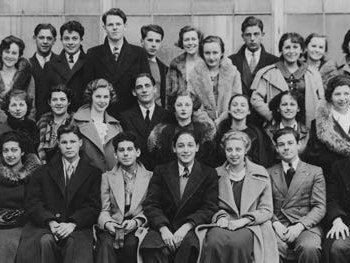
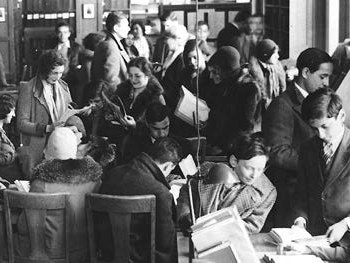
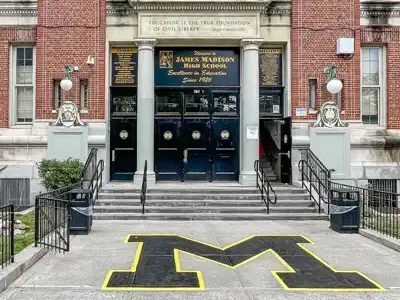
After attending PS 98 and Shell Bank JHS, Rich was accepted at Stuyvesant, but being only 13 at the time, his parents wouldn’t let him go. At Madison, he said, “I was a pretty serious student and was intent on maximizing my chances to get into a top-notch college.” Noting Mr. Charles Feit in calculus and Mr. Wolf in chemistry, Rich said, “I recall great teachers. Many in the English and history departments had law degrees, and in the math and sciences they had PhDs – I just thought that was required. Years later, I realized that this was special and was likely a vestige from their getting their professional degrees during the Depression and taking teaching positions . . . Weren’t we lucky to have benefited that way!”
He also remembered a teacher who took the math team to Columbia University where they learned programming on an IBM computer. Rich wrote a long program that eventually divided a quantity by zero, resulting in infinity. The machine froze, and upon cross-examination by his teacher, he admitted that he “was just doing an experiment to see how the machine would react.”
Rich’s uncle, a surgeon, was keen to see him follow his career path and he invited Rich, then a teenager, to watch an operation. Rich saw the blood and fainted. Scratch medicine; think engineering. Rich believes his interest today in MIS is partially due to such surgery being almost bloodless.
Graduating at 16, he was accepted on scholarship by Columbia but decided to attend City College’s highly rated engineering program. He graduated with honors and was awarded a National Defense Education Act Fellowship enabling him to pursue an MSEE (1965) and a Doctor of Engineering Science (1969) at Columbia.
In addition to developing DSL at Bell Labs, Rich also worked on a coding technique (multi-code CDMA) used in 3G wireless systems, and an “intelligent” antenna system that forms the basis of 5G wireless technology. After retiring in 2001, he was a visiting professor of Electrical Engineering at Columbia, and later CTO of Hammerhead Systems, a venture-funded networking company in Silicon Valley. At USF he is a State of Florida 21st Century World Class Scholar, a Distinguished University Professor, and the Agere Systems Chair of Electrical Engineering.
Rich holds 60 patents, has published over 100 papers, and co-authored a graduate textbook on data communications. He is a Charter Fellow of the National Academy of Inventors and a member of numerous engineering societies, including the National Academy of Engineering, the highest level of recognition in the profession. Affiliated NAE frat rats include Bill Gates (Microsoft), Eric Schmidt (Google), and Louis Gerstner (IBM). And for you Apple fans, Steve Jobs didn’t make the cut.
When not working, Rich likes to play tennis, work out, and take long walks near downtown Tampa with Barbara, his wife of 50 years. They have two children and two grandchildren. He can be reached at richgitlin@gmail.com.
Larry Spear is a retired electrical engineer.